THIMUN rules of procedure
How formal debate works: taking the floor, points of information, yielding, points, motions, amendments, voting and the Security Council, with the exact words to say.
Roll call
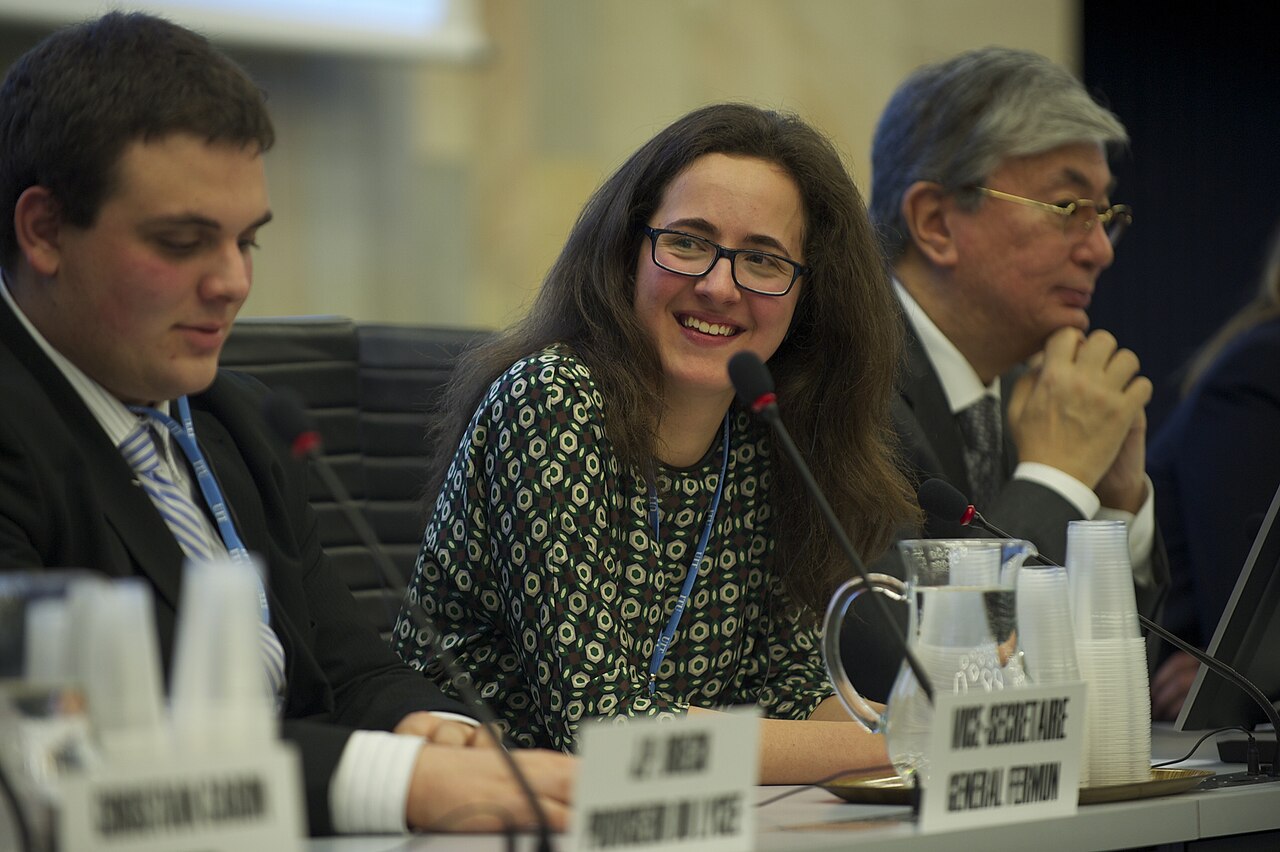
At the start of a session the chair calls each delegation to confirm who is there. You answer:
- “Present”: you may abstain in votes.
- “Present and voting”: you may not abstain; you must vote for or against.
Debate on a resolution, step by step
- The chair sets the debate time for the resolution and says whether debate is open or closed.
- The main submitter takes the floor, reads out the operative clauses and gives a speech in favour.
- Points of information to the speaker, if the speaker is open to them.
- The speaker yields the floor, to the chair or to another delegate.
- Further speakers are recognised by the chair, speaking for or against.
- Amendments may be submitted and debated along the way.
- Debate time ends (or a motion to move to the previous question passes).
- Voting procedure on the resolution as a whole.
Open and closed debate
| Type | How it works |
|---|---|
| Open debate | Speakers may speak for or against in any order. |
| Closed debate | Debate is split into time in favour, then time against. Only speakers on that side may speak during each part. Amendments are usually debated this way. |
Taking the floor
- Raise your placard when the chair asks for speakers, and wait to be recognised.
- The chair sets the speaking time. Your answers to points of information count against debate time; the questions themselves do not.
- Begin formally and speak in the third person.
Points of information (POIs)
- A POI is a question to the speaker who has the floor.
- You may only raise one after the chair asks for points of information, and only if the chair recognises you.
- It must be phrased as a question. A short introduction may come before it.
- Some chairs allow a follow-up question; it is at their discretion.
Yielding the floor
- To the chair: you finish and the chair continues debate.
- To another delegate: they speak next on your time. The floor may only be yielded from one delegation to another once in a row; the second delegate must yield back to the chair.
- Points of information are still in order after the floor has been yielded to another delegate.
Points
Points raise a question or problem. Apart from one exception, a point may not interrupt a speaker.
| Point | When to use it | Interrupts a speaker? |
|---|---|---|
| Point of Personal Privilege | Your comfort or well-being, most often that you can't hear the speaker. | Only for audibility |
| Point of Order | The chair or committee has made a procedural mistake. | No |
| Point of Parliamentary Inquiry | A question to the chair about the rules of procedure. | No |
| Point of Information to the Chair | Any other question to the chair. | No |
| Point of Information to the Speaker | A question to the speaker, when the chair opens the floor to POIs. | No |
Motions
Motions propose an action by the committee. They usually need a second from another delegate, and the chair can rule them out of order.
| Motion | What it does |
|---|---|
| Motion to move to the previous question | In closed debate, moves from time in favour to time against, or from time against to voting. In open debate, ends debate and moves to voting. Needs a second; the chair may overrule it. |
| Motion to extend debate time | Asks for more time on the current resolution or amendment. Used at many conferences, at the chair's discretion. |
Other motions (for example to adjourn or table debate) exist at some conferences but not others. Check your Rules of Procedure.
Amendments
Amendments change a resolution during debate. They can add, strike (remove) or change part of the text.
- Write it down and send it to the chair, usually on an amendment sheet or through the committee's system.
- The chair decides if it is in order and when it will be debated.
- You read it out when recognised; the chair sets debate time, usually as closed debate.
- The committee votes on the amendment. If it passes, the resolution's text changes.
Amendments to the second degree
A second-degree amendment changes an amendment that is currently being debated. It follows the same procedure and can only be submitted against the first-degree amendment on the floor. Under the 2026 THIMUN Hague rules, if the second-degree amendment passes, the first-degree amendment passes automatically, because the two now count as one. Amendments to the third degree are out of order.
Voting procedure
- When voting starts, debate stops. Delegates usually may not talk or pass notes.
- Delegates vote for, against or abstain by raising placards. Delegations that said “present and voting” may not abstain.
- Most resolutions pass with a simple majority of votes for over votes against. Check your rules.
- Division of the house (a re-vote without abstentions) and roll-call votes are allowed at some conferences but not others. The 2026 THIMUN Hague rules allow neither.
Security Council rules
- The Security Council has 15 members: 5 permanent (China, France, Russia, the United Kingdom and the United States) and 10 elected.
- On substantive matters, a resolution needs 9 votes in favour and no vote against from a permanent member (UN Charter, Article 27). A permanent member's vote against is a veto.
- Veto rights apply only in the Security Council, never in other committees.
- In THIMUN's Security Council, each operative clause is usually debated and voted on separately.
- Security Council decisions can be binding on all UN members (UN Charter, Article 25).
Cheat sheet
| You want to… | Say |
|---|---|
| Answer roll call | “Present” or “Present and voting.” |
| Speak on a resolution | Raise your placard when the chair asks for speakers. |
| Accept questions | “The delegate is open to any and all points of information.” |
| Finish your speech | “The delegate yields the floor back to the chair.” |
| Ask the speaker a question | “Point of information to the speaker…” (only when the chair asks) |
| Say you can't hear | “Point of personal privilege: could the speaker speak louder?” |
| Ask about the rules | “Point of parliamentary inquiry.” |
| Point out a procedural mistake | “Point of order.” |
| Move to voting or to time against | “Motion to move to the previous question.” |
| Change the resolution | Send an amendment to the chair in writing. |