Preparing for a conference
Good delegates win their committee before they arrive. This page covers research, the policy statement, the opening speech, what to bring and how to behave in committee.
1. Understand your allocation
Your school receives a country (or organisation), and you are placed in a committee with a list of issues (topics). Write down exactly:
- Your country and your committee.
- Each issue, word for word.
- Deadlines for policy statements or draft clauses, if your conference has them.
Remember: you represent your country's position, even if you personally disagree with it.
2. Research
Your country
- Government type, leader, population, economy and main industries.
- Allies, regional groups and organisations it belongs to (for example ASEAN, the EU, the African Union, NATO or the G77).
- Its general foreign policy and its relationships with key countries.
Each issue
- Background: what the problem is, where it happens, who is affected and why it matters.
- Key terms you must be able to define.
- Past UN action: resolutions, treaties, conventions and agencies involved.
- The main positions: which countries or blocs agree or disagree, and why.
Your country on each issue
- Statements by your country's government or UN ambassador.
- How your country voted on related UN resolutions, and which treaties it has signed or ratified.
- What your country would realistically support, and what it would never accept.
3. Where to research
- The UN's own websites (un.org, UN News and press releases): official background and recent action.
- UN Digital Library: past resolutions and voting records.
- Your country's foreign ministry and UN mission websites: its official positions.
- UN agencies related to your issue, for example UNHCR, WHO, UNICEF or UNEP.
- Reliable news and think-tank reports for recent developments.
Keep a list of your sources. You may need to back up your claims during debate.
4. Write a policy statement
A policy statement is a short written summary of your country's position on an issue. It is similar to a position paper at other conferences, and often becomes the basis for your opening speech. Length limits vary by conference; some set a maximum of around 300 words.
A simple structure
- The issue. One or two sentences on what the problem is and why it matters.
- Your country's connection. How the issue affects your country, or why your country cares.
- Past actions. What your country has already done: laws, treaties, aid, votes.
- Position and solutions. What your country wants the committee to do.
5. Draft your clauses
In THIMUN-style conferences, delegates usually bring draft clauses or a full draft resolution. During lobbying, you merge these with allies. Prepare:
- 3 to 6 strong operative clauses per issue: specific actions your country supports.
- A few preambulatory clauses: reasons and past UN actions.
See resolution format and the phrase lists.
6. The opening speech
Opening speeches are usually limited to about one minute. Not every delegation gives one, as the chairs often provide a list, and the chair will stop you if you go over time.
Structure
- Opening flourish. A strong first line: a striking fact, question or image.
- One main point. Your country's key concern and what it will support.
- Closing flourish. A memorable last line.
Time yourself and practise out loud. See the public speaking guide for delivery tips.
7. What to bring
- Printed or saved research, policy statements and draft clauses.
- A laptop and charger, if your conference allows devices (check the rules).
- Notepaper and pens for notes to other delegates.
- A copy of your conference's Rules of Procedure.
- Water and snacks for long sessions.
8. Dress code
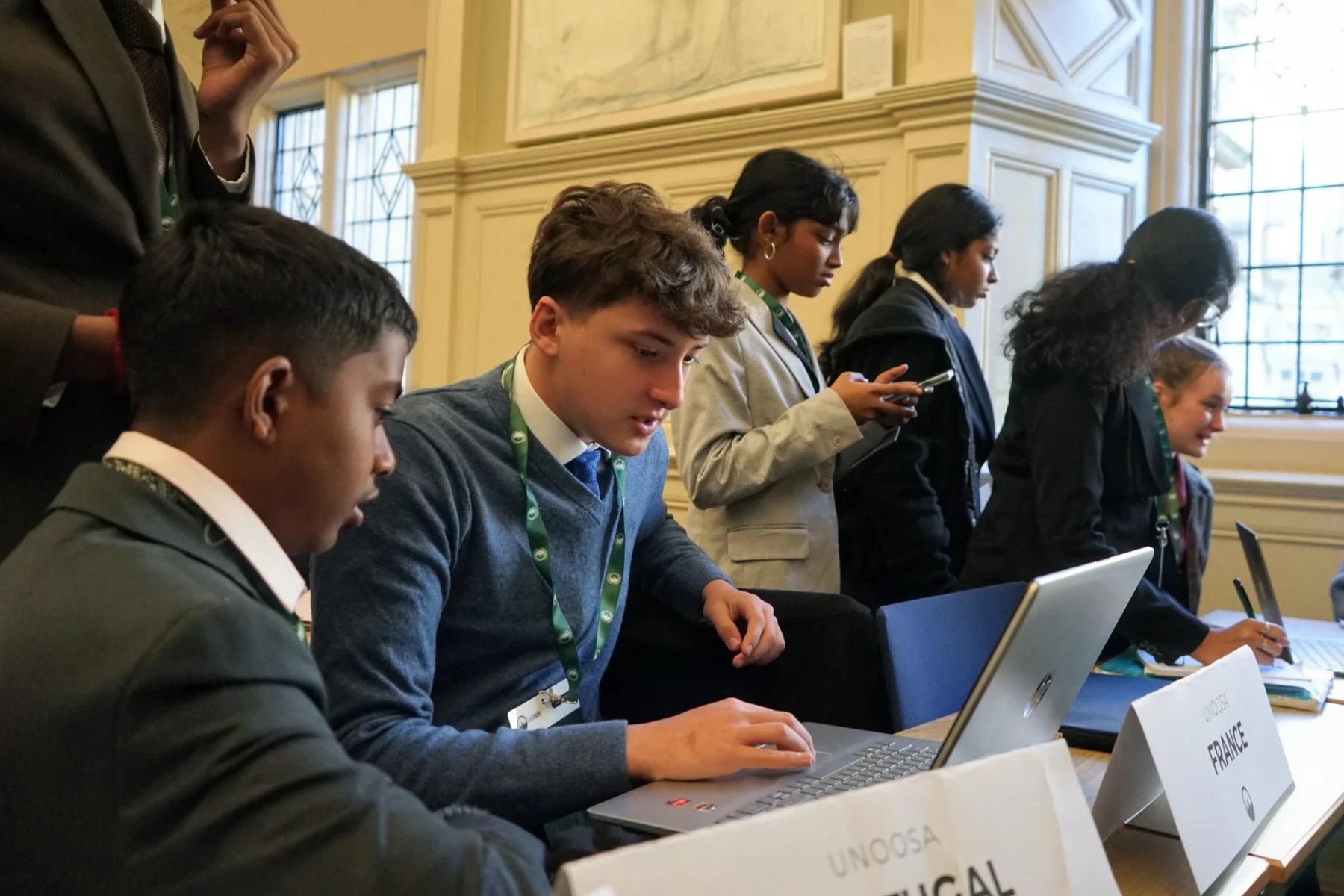
Most conferences require Western business attire, such as a suit or blazer, formal trousers or a skirt, and a shirt or blouse. Some allow national or traditional dress. Check your conference's dress code.
9. Conduct and diplomacy
- Speak in the third person: “The delegate of Japan believes…”.
- Address the room formally: “Honourable Chair(s), distinguished delegates…”.
- Wait to be recognised by the chair before speaking. Raise your placard.
- Stay in character: argue your country's policy, not your own.
- Be respectful: criticise ideas, never people or countries in an insulting way.
- Notes: at most conferences you send written notes to other delegates through the admin staff. Keep them about committee business.
10. Final checklist
- I can explain each issue and its key terms in one minute.
- I know my country's position and its allies on every issue.
- My policy statement is finished and within the word limit.
- I have draft clauses ready to merge.
- My opening speech is under the time limit.
- I have read the conference's Rules of Procedure.