British Parliamentary debate
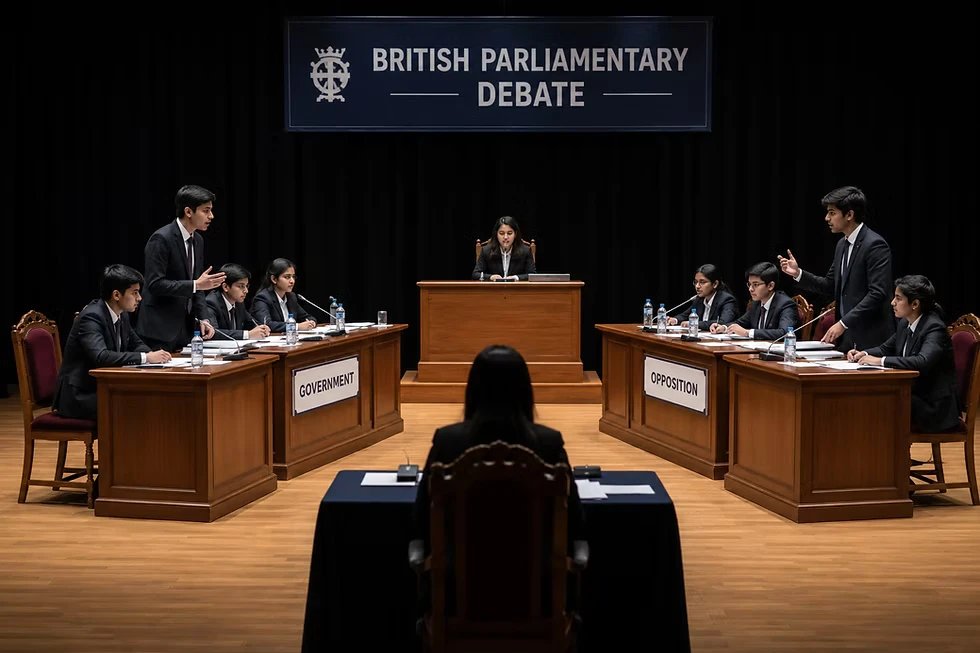
Four teams, eight speakers, one motion. British Parliamentary (BP) is the format of the World Universities Debating Championship and is widely used in university and school competitions.
The format
- Four teams of two: two teams on the Government side (for the motion) and two on the Opposition side (against).
- Each side has an opening team and a closing team: Opening Government (OG), Opening Opposition (OO), Closing Government (CG) and Closing Opposition (CO).
- Each speech is 7 minutes at university level; junior competitions often use shorter times.
- Teams compete against all three other teams, including the team on their own side.
Speaking order
| # | Speaker | Team |
|---|---|---|
| 1 | Prime Minister | Opening Government |
| 2 | Leader of the Opposition | Opening Opposition |
| 3 | Deputy Prime Minister | Opening Government |
| 4 | Deputy Leader of the Opposition | Opening Opposition |
| 5 | Member of Government | Closing Government |
| 6 | Member of Opposition | Closing Opposition |
| 7 | Government Whip | Closing Government |
| 8 | Opposition Whip | Closing Opposition |
Speaker roles
Prime Minister
Defines the motion, sets out the Government's case and presents Opening Government's main arguments.
Leader of the Opposition
Responds to the definition, rebuts the Prime Minister and presents Opening Opposition's main arguments.
Deputy Prime Minister and Deputy Leader of the Opposition
Rebut the other side, defend their team's case and develop it with further analysis or arguments.
Member of Government and Member of Opposition (the “extension”)
The first speaker of each closing team must bring new material to the debate, called an extension, and show clearly how it differs from what the opening team on their side said.
Government Whip and Opposition Whip
Summarise the debate from their side, support their own extension and rebut the other closing team. Whips may not introduce new arguments, but new rebuttal, new examples and new explanations of existing arguments are allowed.
Points of information
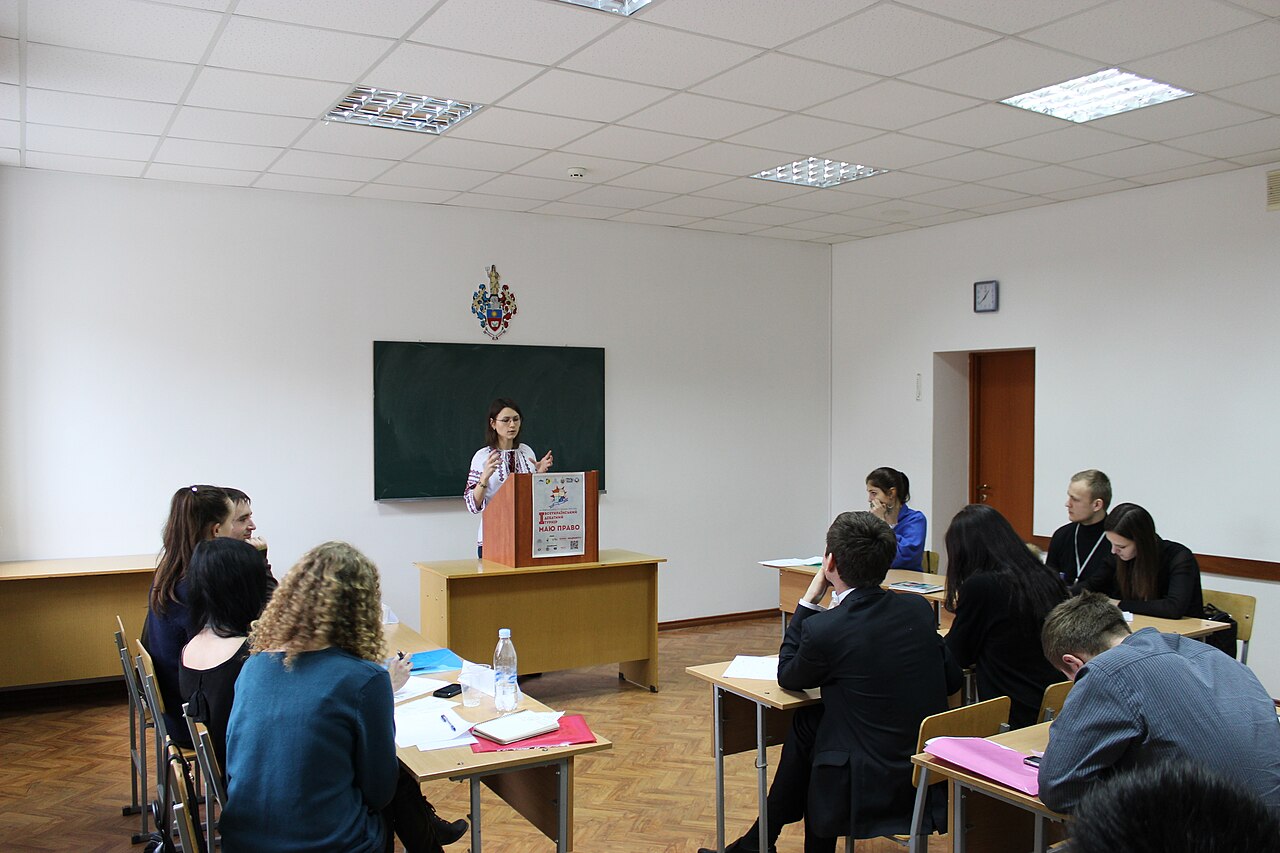
- The first and last minute of each speech are protected: no POIs.
- POIs can only be offered by teams on the opposite side, not by the other team on your own bench.
- No POIs may be offered after the six-minute mark.
- The speaker chooses whether to accept. At the World Universities Championship, anything said after 7 minutes 15 seconds is not counted by the judges.
Preparation
The motion is announced and teams get 15 minutes to prepare before the debate starts. Each team prepares separately; you do not prepare with the other team on your side.
- Understand the motion and what each side needs to prove.
- Brainstorm as many arguments as possible for your side.
- Plan for your position: opening teams pick their strongest material; closing teams also plan possible extensions.
- Split roles and write short outlines.
Results
The judges rank the four teams from first to fourth. Teams receive 3 points for 1st, 2 for 2nd, 1 for 3rd and none for 4th. Speakers also receive individual speaker scores.
Winning from a closing position
- Listen closely to the opening half and find what has not been said yet.
- Your extension can be a new argument, a new stakeholder, or deeper analysis that proves the case better.
- Explain why your extension matters more than the opening team's material.
- Never contradict the opening team on your own side (known as “knifing”).
Tips
- Offer POIs regularly to stay visible and engaged, especially from closing positions.
- Compare: judges rank teams, so show why your team did more than the others.
- Keep track of time: stop before the judges stop listening.